
Laser resurfacing · Owasso, OK
Laser skin resurfacing in Owasso and Tulsa
Laser skin resurfacing uses focused laser energy to remove or heat damaged layers of skin so new skin can grow in, smoother and firmer.
It is one of the most effective cosmetic procedures for wrinkles, acne scars, sun damage and uneven skin texture. If creams and facials have stopped making a difference, laser resurfacing is often the next step. Tia Christ, APRN-CNP, performs every laser treatment herself. The clinic is in Owasso, a short drive from Tulsa.
HSA and FSA accepted · Financing through Cherry
The basics
What is laser skin resurfacing?
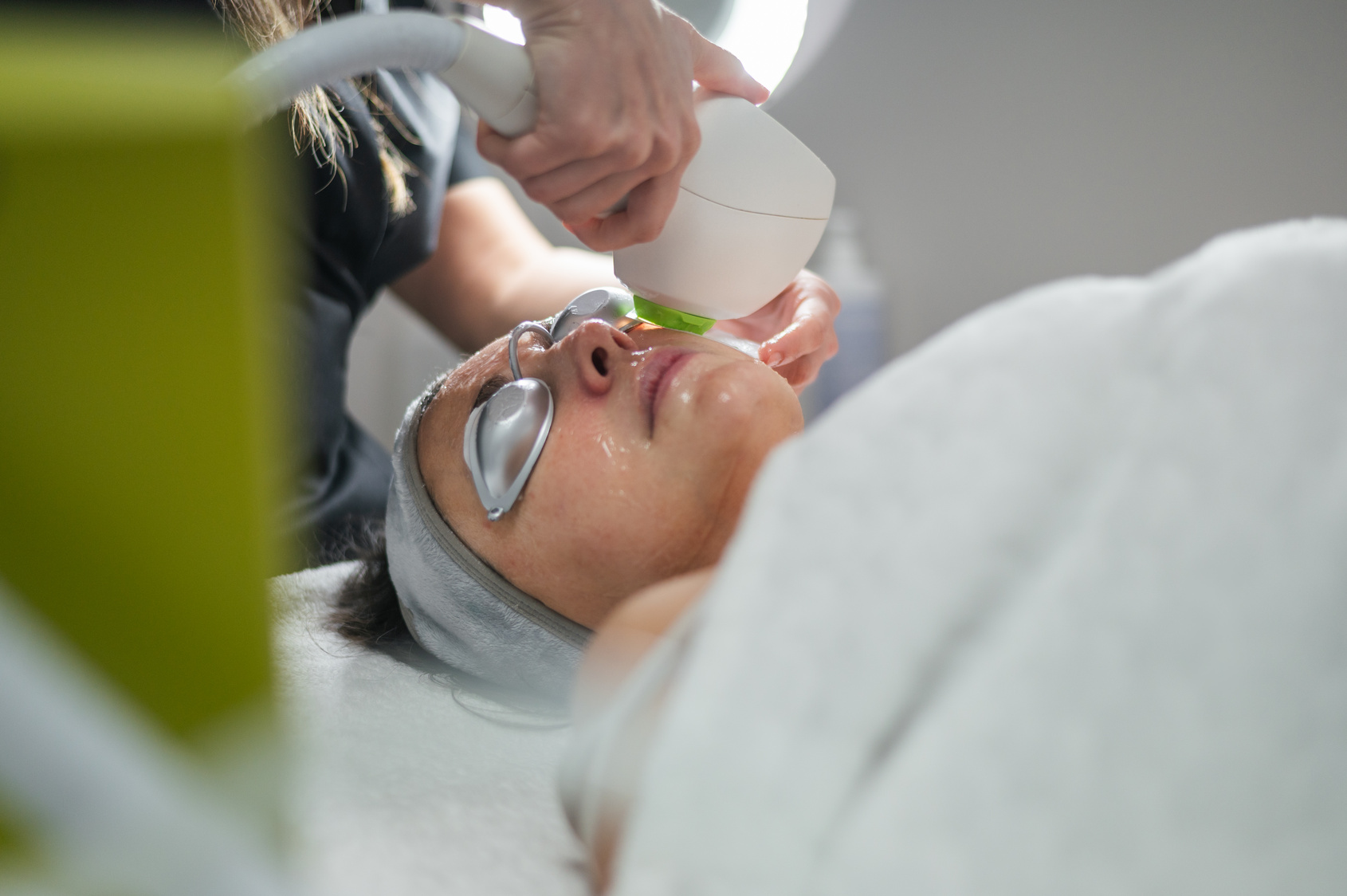
Laser resurfacing, sometimes called a laser peel or laser vaporization, is an outpatient procedure that directs short, concentrated beams of laser energy at the skin. Depending on the type of laser, it either removes the outer layer of skin or heats the deeper layers without breaking the surface.
Both approaches trigger the healing process and new collagen production, so the treated skin heals with better tone and texture. Laser resurfacing will not remove excess sagging skin or deep folds. Those usually need a consultation with plastic surgeons.
Used to treat
- Fine lines and moderately deep lines
- Acne scars and other skin scars
- Sun damaged skin, age spots and uneven skin coloring
- Rough or irregular skin texture and enlarged pores
- Mild sagging skin and crepey texture
- Enlarged oil glands on the nose
Ablative and non ablative
Types of laser resurfacing
Ablative laser resurfacing removes the outer layer of skin (the epidermis) and heats the layer underneath. Non ablative lasers heat deeper layers of skin without removing the surface.
CO2 lasers (ablative)
Carbon dioxide (CO2) lasers treat deeper wrinkles, scars and significant sun damage. Results are dramatic, and recovery takes the longest, often 1 to 3 weeks.
Erbium lasers (ablative)
Erbium laser resurfacing removes surface damage with less heat to surrounding skin. Good for fine to moderately deep lines, with about 1 to 2 weeks of recovery. It may suit some darker skin tones better than CO2.
Non ablative laser resurfacing
Heats the deeper layers without removing the surface. A few days of redness and swelling, with little downtime. Usually 3 to 5 sessions, with more gradual results.
Fractional lasers
Fractional lasers treat a grid of tiny columns and leave the skin around them untouched, which speeds healing. Most ablative treatments today are fractional.
Compare
Laser resurfacing vs intense pulsed light (IPL)
Intense pulsed light (IPL) is not a laser. It uses short pulsed light energy across many wavelengths to target brown spots and redness, while lasers use a single wavelength. For age spots and redness with little texture change, an IPL photofacial is often a better fit.
| Ablative (CO2, erbium) | Non ablative fractional | IPL photofacial | |
|---|---|---|---|
| Best for | Deeper wrinkles, scars, heavy sun damage | Fine lines, texture, mild scars | Age spots, sun spots, redness |
| Downtime | About 1 to 3 weeks | About 2 to 5 days | About 1 week of darkened spots |
| Sessions | Usually 1 | Usually 3 to 5 | Usually 3 to 5 |
| Results | Most dramatic | Gradual | Clearer, more even tone |

Is it right for you?
Are you a candidate for laser skin resurfacing?
You may be a good candidate for laser resurfacing if you have wrinkles, acne scars, sun damage or non responsive skin after other skin rejuvenation treatments.
Laser resurfacing works best on lighter skin tones. Brown skin and very dark skin have a higher risk of changes in skin coloring with some lasers, so the type of laser matters. Tia will choose the safest option for your skin, or recommend microneedling instead.
If you have had a herpes simplex cold sore, you will usually take an antiviral medication before and after ablative treatments.
The right laser for your skin
New skin, built from the inside out.
We match the type of laser to your skin type and goals, and tell you when another treatment is safer.
Step by step
What to expect
- 01
Consultation
Your skin concerns, medical history, medications and skin type, and which type of laser fits.
- 02
Preparation
Stop retinoids and exfoliants, avoid sun exposure and use sun protection factor 30 or higher. Antiviral medication if needed.
- 03
Treatment
Numbing cream or a local anesthetic, then about 30 minutes to 2 hours depending on the treated area.
- 04
Healing
Treated skin is red and swollen and may peel as it heals. Tia checks your progress.
Recovery
Recovery and aftercare
After ablative treatments, skin heals over 1 to 3 weeks, and pinkness can last a few months. After non ablative treatments, redness usually fades within a few days.
Risks and side effects
Laser skin treatments are safe when performed by a trained provider, but side effects can include redness, swelling, itching, acne flares, infection, cold sore outbreaks, and lighter or darker patches of skin. Scarring is rare. Telling us your full medical history and following aftercare closely lowers these risks.
Aftercare
- Keep the treated area clean and moisturized as directed
- Avoid sun exposure and wear broad-spectrum sunscreen every day
- Skip makeup until the skin heals
- Do not pick at peeling skin
Pricing
Laser skin resurfacing cost
Laser skin resurfacing cost depends on the type of laser, the size of the treated area and the number of sessions. National averages run roughly $1,000 to $2,500 or more per treatment, with ablative CO2 treatments at the higher end.
You get our exact price at your consultation, before you commit. Elite Health & Hormone Plan members get 10% off medspa services, and Functional Primary Care members get 5% off. We offer financing through Cherry.
Not a good fit if you
- Have active acne or a skin infection in the treatment area
- Took isotretinoin in the last 6 to 12 months
- Have a history of keloids or poor wound healing
- Are pregnant or breastfeeding
- Have a deep tan or plan heavy sun exposure soon after
Why Pathway
Why patients choose Pathway for laser resurfacing
- A nurse practitioner every time. Tia Christ, APRN-CNP, performs every laser treatment herself.
- The right laser for your skin. We match the type of laser to your skin type and goals, and say so when another treatment is safer.
- Medical-first care. Your medical history and medications are reviewed before any procedure.
- Real aftercare. Follow-up until your skin heals.
- Close to home. Patients come from Owasso, Tulsa, Broken Arrow, Claremore, Collinsville and Skiatook.
Serving Tulsa County
Laser skin resurfacing near Tulsa, OK
Pathway Health & Beauty is at 7301 N Owasso Expy, Ste M115, Owasso, OK 74055, an easy drive from Tulsa. If you are looking for laser skin resurfacing in Tulsa or laser resurfacing near me, many of our patients make the short trip.
See all med spa treatments.
FAQ
Laser resurfacing questions
How does laser skin resurfacing work?
Laser skin resurfacing works by removing or heating layers of skin with laser energy. The skin heals by making new collagen and new skin cells, so it looks smoother and more even.
How long do laser resurfacing results last?
Results can last for years, especially with daily sunscreen. Your skin keeps aging, so some people do maintenance treatments.
Does laser resurfacing hurt?
Numbing cream or a local anesthetic keeps most people comfortable. Many describe the feeling as warm snapping. Ablative treatments are more intense than non ablative ones.
How many laser resurfacing sessions will I need?
One session is often enough for ablative treatments. Non ablative fractional lasers usually take 3 to 5 sessions about a month apart.
Is laser resurfacing safe for dark skin?
Some lasers are safe for darker skin tones with careful settings, but the risk of skin color changes is higher. Tia will recommend the safest option, which may be microneedling.
What is the difference between laser resurfacing and a chemical peel?
Both remove damaged skin. Laser resurfacing gives more control over depth and is better for deeper lines and scars. Chemical peels use acids and are often better for mild tone and texture concerns.
When is the best time of year for laser resurfacing?
Fall and winter are popular, because there is less sun exposure while your skin heals.
From the blog
Related guides
Med spa
IPL vs Laser: Which Skin Treatment Do You Need?
How intense pulsed light and lasers differ, which works best for spots, redness, wrinkles and hair, and who should avoid IPL.
Read the guide →Med spa
How Long Does Botox Last? Timeline, Factors and Tips
The week-by-week timeline, how long results last by area, and what makes neurotoxin last longer or wear off sooner.
Read the guide →